
Standalone Automated Systems
Our standalone automated 3D scanning systems are designed to simplify and accelerate repeatable scanning workflows without requiring custom integration or complex setup. These systems combine professional 3D scanners with built-in automation components such as robotic arms, rotary tables, and multi-axis positioning systems to improve coverage, consistency, and efficiency.
They are optimized for:
• Automated multi-angle scanning
• Repeatable and consistent scan positioning
• Reduced manual operator input
• Faster data capture for inspection and reverse engineering
• Easy deployment with minimal setup requirements
These systems are commonly used in applications such as:
• Part inspection and quality control
• Reverse engineering workflows
• Product development and prototyping
• Digital archiving and documentation
• Batch scanning of repeat components
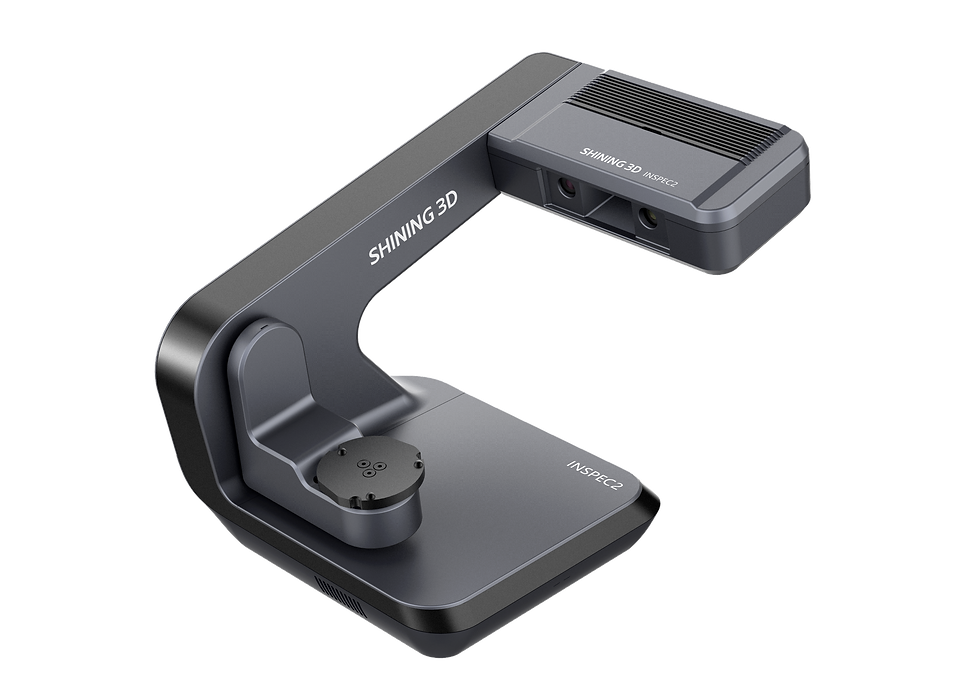
Desktop metrology grade automated scanning system. Features 3-axis turntable, enabling hands-free, multi-angle scanning
with one-click operation to capture data efficiently.

The standardized automation solution of RobotScan Series is designed to meet the typical inspection demands in modern manufacturing. It supports both high-precision fringe projection scanners and handheld laser scanners.

Designed for precision and efficiency, this advanced system streamlines the scanning and quality inspection process, ensuring accurate measurements with minimal operator involvement.
Customized Automated Systems
In addition to off-the-shelf systems, we design and support custom automated scanning solutions built around specific applications and workflows.
Many of the scanning systems we offer can be mounted on robotic platforms and integrated using SDKs and APIs, allowing for flexible automation and system development.
These systems are typically used for:
-
Automated inspection and quality control
-
Repeatable measurement workflows
-
High-volume or production-line scanning
-
Custom manufacturing and inspection systems
We work with customers to define system requirements and develop solutions tailored to their specific applications.


